

Voice search has fundamentally transformed how customers find local service businesses. When someone asks Alexa “Who does emergency HVAC repair near me?” or tells Siri “Find a plumber open now,” they expect immediate, accurate answers. For home service contractors, optimizing for voice search isn’t optional anymore—it’s essential for capturing high-intent customers at the exact moment they need your services.
This comprehensive guide explores how local service businesses can dominate voice search results across all major platforms, from traditional voice assistants to emerging AI-powered search engines. You’ll discover proven strategies that work whether customers are using Alexa, Siri, Google Assistant, ChatGPT, or any other voice-enabled platform.
What Makes Voice Search Different for Local Businesses?
Voice search fundamentally differs from typed search in ways that directly impact how customers find your business. When someone types a query, they might search “hvac repair 15217” or “emergency plumber.” But voice searches sound completely different: “Where can I get my AC fixed today?” or “I need a plumber who can come right now.”
Key Differences Between Voice and Text Search
- Query length: The average voice search query contains 29 words compared to just 3-4 words for text queries
- Natural language: Voice searches use complete sentences and conversational phrases rather than keyword fragments
- Local intent: Nearly all voice searches for service businesses include geographic or proximity-based intent
- Immediate answers: Customers expect direct recommendations rather than browsing through multiple search results
- Mobile context: Most voice searches happen on mobile devices and smart speakers, often in urgent situations
- Question format: Voice queries frequently begin with who, what, where, when, or how
The implications for local contractors are significant. You need content that directly answers common customer questions using the same conversational language they use when speaking. Traditional keyword stuffing strategies fail completely because voice assistants parse natural language and extract meaning rather than matching exact keyword phrases.
How Do Voice Assistants Find Local Businesses?
Each major voice platform relies on different data sources and ranking factors to recommend local businesses. Understanding these differences helps you optimize effectively across all platforms rather than putting all your efforts into just one channel.
Google Assistant and Google Home
Primary data sources:
- Google Business Profile data and local search rankings
- Website authority and relevance signals
- Structured data and schema markup
- User proximity to business location
Key ranking factors:
- Complete, verified business profiles
- Review ratings, quantity, and recency
- NAP consistency across the web
- Website content quality and relevance
- Mobile-friendly website experience

Amazon Alexa
Primary data sources:
See our guide on local citation building strategies for best practices in improving business visibility and local SEO.
- Yelp business listings and reviews
- Partner directories and local databases
- Sponsored advertising placements
Key ranking factors:
- Yelp review ratings and volume
- Business category accuracy
- Hours of operation and availability
- NAP consistency across platforms
- Business description completeness
Apple Siri and Apple Maps
Primary data sources:
- Apple Business Connect listings
- Yelp and TripAdvisor reviews
- Apple Maps business data
- Siri Knowledge responses
Key ranking factors:
- Complete Apple Business Connect profiles
- Multi-platform review quality
- Geographic proximity to searcher
- Business category relevance
- Special attributes and features
ChatGPT and Emerging AI Platforms
Primary data sources:
- Direct website content parsing
- Multiple web sources aggregation
- Review mentions across platforms
- Real-time availability data
Key ranking factors:
- Content depth and expertise signals
- Online reputation strength
- E-E-A-T indicators
- Structured data implementation
- Source credibility and citation-worthiness
The common thread across all platforms is comprehensive, consistent local business information combined with strong reputation signals. Businesses that maintain complete profiles everywhere, earn genuine reviews consistently, and publish helpful content naturally dominate voice search results.
What Are Long-Tail Keywords for Voice Search?
Voice searches naturally generate long-tail keyword phrases because people speak in complete sentences and questions. Rather than targeting traditional short keywords, successful voice search optimization focuses on the exact questions and phrases customers actually speak.
Common Voice Search Patterns for Home Services
Question-based searches:
- “Who does emergency furnace repair in Squirrel Hill?”
- “Where can I find a licensed electrician near me?”
- “Which HVAC company has the best reviews?”
Action-oriented phrases:
- “Find a roofer who can give me a quote today”
- “Call a plumber for a broken water heater”
- “Schedule an electrical inspection this week”
Conversational queries:
- “I need someone to fix my air conditioner”
- “My toilet won’t stop running, who should I call?”
- “Can anyone come fix my furnace tonight?”
Time-sensitive searches:
- “HVAC companies open right now”
- “24-hour emergency plumber near me”
- “Same day roof repair service”
Problem description searches:
- “What do I do if my circuit breaker keeps tripping?”
- “How do I know if I need a new roof?”
- “Why is my AC blowing warm air?”
How to Optimize for Long-Tail Voice Search Keywords
The most effective approach combines identifying the actual phrases customers use with creating content that naturally addresses these questions. For example, Local SEO services for HVAC companies focus on writing naturally and comprehensively about the topics customers care about, rather than awkwardly stuffing long-tail keywords into your content.
Content strategies for voice search optimization:
- Create dedicated service pages addressing specific problems and questions in natural language
- Develop comprehensive FAQ sections answering common customer questions
- Write blog content targeting “how to” and “what to do” queries related to your services
- Use conversational language matching how customers actually speak
- Include location-specific content for neighborhoods you serve
- Address urgency-based searches with content about emergency services and availability
- Create seasonal content around weather-related service needs
The goal isn’t manipulating search engines with keyword optimization. It’s genuinely helping customers by answering their questions thoroughly. When you address the real concerns customers voice in their searches, you naturally optimize for voice search without forced keyword insertion.
How Do I Optimize for Alexa Local Search?
Amazon Alexa powers millions of Echo devices and has become many consumers’ first stop for finding local services. Because Alexa relies heavily on Yelp data, your optimization strategy needs to prioritize Yelp alongside your other local presence efforts.

Essential Alexa Optimization Tactics
Yelp profile optimization:
- Claim and fully complete your Yelp for Business profile with comprehensive service information
- Choose the most accurate business category in Yelp’s system
- Upload high-quality photos of your work, team, and service vehicles
- Maintain accurate business hours including holiday schedules and emergency availability
- Add service area information so Alexa knows which locations you serve
- Enable messaging features for direct customer contact
Review generation strategy:
- Implement systematic review requests after successful service completion
- Make it easy for satisfied customers to leave Yelp reviews with direct links
- Train your team on encouraging reviews without violating Yelp’s policies
- Never offer incentives or compensation for reviews
- Focus on earning authentic reviews from genuinely satisfied customers
- Address negative reviews constructively
- Monitor your Yelp presence regularly and respond promptly to new reviews
Engagement best practices:
- Respond professionally to every Yelp review
- Answer questions in your Yelp Q&A section
- Post regular updates about services and availability
- Ensure NAP information matches exactly across all platforms
- Track your Yelp ranking for key service categories
The businesses that consistently dominate Alexa local search results maintain active, highly-rated Yelp profiles with regular review activity and comprehensive business information.
How Do I Optimize for Siri and Apple Maps?
Siri searches pull from Apple Maps and integrate data from multiple sources including Yelp, TripAdvisor, and other review platforms. Optimizing for Siri requires claiming your Apple Business Connect listing and maintaining consistency across the Apple ecosystem.
Critical Siri Optimization Elements
Apple Business Connect setup:
- Claim your business through Apple Business Connect
- Verify your business ownership to access enhanced features
- Complete every available field in your profile
- Add detailed service descriptions using natural language
- Upload professional photos showcasing your work and team
Profile enhancement:
- Select accurate business categories matching customer search behavior
- Include comprehensive service area information
- Maintain accurate hours including holiday schedules
- Enable “message the business” features
- Add special attributes like “veteran owned” or “family operated”
- Regularly update information when services or contact details change
Multi-platform consistency:
- Ensure NAP consistency across Apple Maps, Yelp, and Google
- Maintain similar business descriptions across platforms
- Keep hours synchronized everywhere
- Upload consistent branding and imagery
Apple Business Connect offers unique opportunities to showcase your business directly within the Apple ecosystem. Many contractors overlook this platform entirely, creating an opportunity for savvy businesses to dominate Siri results with minimal competition.
How Do I Optimize for Google AI Overviews and ChatGPT?
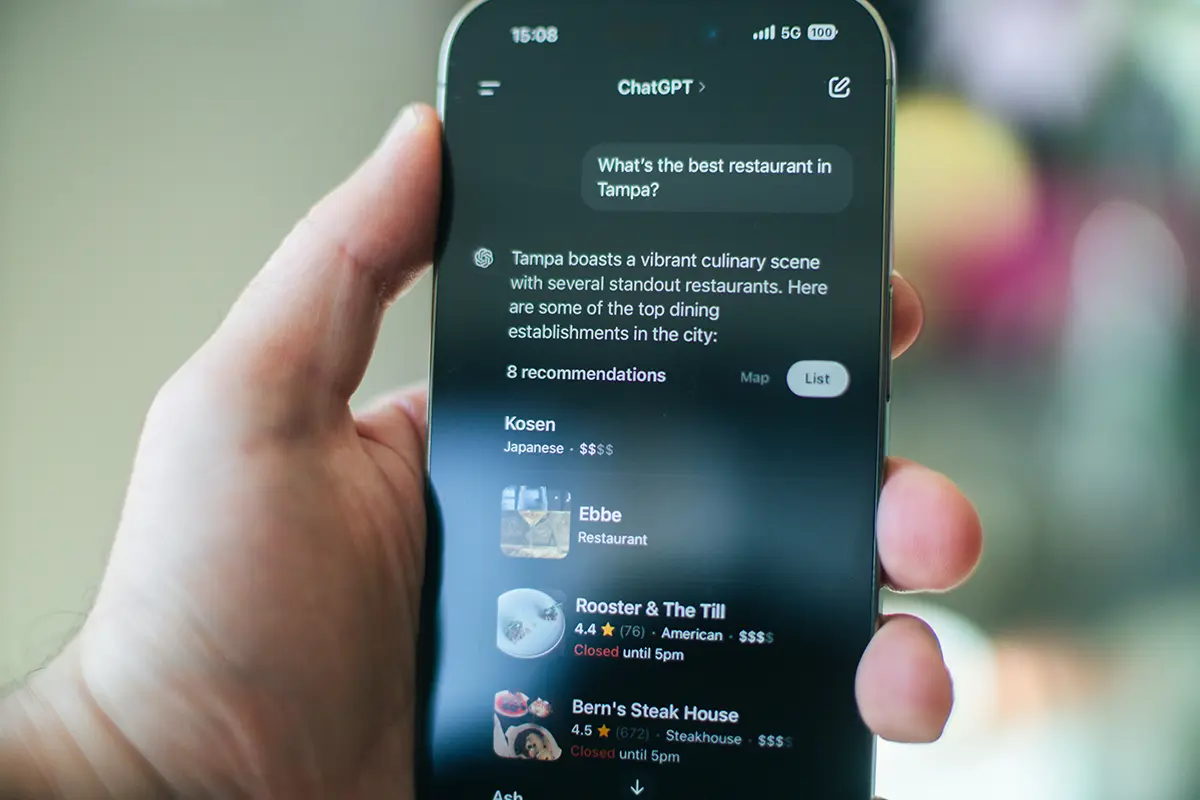
Google AI Overviews now appear at the top of many local search results, providing AI-generated summaries that answer user questions directly. Similarly, ChatGPT and other AI chatbots increasingly serve as search alternatives, especially for users seeking conversational assistance with local service needs.
Why AI Platforms Change Local Search
These AI platforms fundamentally change how your business gets discovered. Traditional SEO focused on ranking in the top ten results, but AI Overviews and chatbot responses might only mention one or two businesses or none at all. Getting featured in these AI-generated responses requires a different optimization approach.
How AI Platforms Evaluate Local Businesses
Content analysis:
- AI platforms parse your website content directly to understand your services
- They evaluate content depth, comprehensiveness, and helpfulness
- They look for natural language explaining what you do and how you solve problems
- They assess whether content demonstrates real experience and expertise
Structural understanding:
- Schema markup helps AI systems understand business type, location, and services
- Well-organized content with clear headers improves AI parsing
- FAQ sections provide direct question-answer pairs AI can cite
- Service pages with detailed explanations signal expertise
Trust and authority signals:
- Review mentions across multiple platforms
- Credentials, licenses, and certifications
- Professional associations and industry affiliations
- Content quality and expertise demonstration
Strategies for AI Platform Optimization
Create comprehensive, helpful content:
- Write detailed service pages explaining not just what you do but how and why
- Include real examples from your work and specific problems you’ve solved
- Address common customer concerns before they hire a contractor
- Use conversational language matching how customers ask questions
Implement advanced schema markup:
- LocalBusiness schema with complete business information
- Service schema detailing every service you offer
- Review schema highlighting customer feedback
- FAQ schema marking up questions and answers
- ServiceArea schema specifying everywhere you serve
Build genuine E-E-A-T signals:
- Demonstrate real experience through project examples and case studies
- Show expertise through educational content and industry insights
- Establish authority with credentials and professional affiliations
- Create trust through transparent practices and comprehensive reviews
AI platforms reward businesses that provide genuine value rather than those trying to game the system. Focus on being genuinely helpful, and AI systems will naturally recognize your content as authoritative and worth citing.
What Is Advanced Local Schema Markup?
Schema markup provides structured data that helps search engines and AI platforms understand your business information with precision. While basic schema implementation offers some benefits, advanced schema strategies dramatically improve your visibility in voice search results.
Essential Schema Types for Local Businesses
LocalBusiness schema:
- Business name, type, and category
- Complete NAP information
- Website URL and contact methods
- Geographic coordinates
- Business hours and holiday schedules
Service schema:
- Detailed service descriptions
- Service categories and subcategories
- Service areas covered
- Pricing information where applicable
Review and rating schema:
- Individual review markup
- Aggregate rating data
- Review author information
- Review dates and platforms
FAQ schema:
- Common customer questions
- Detailed answers to each question
- Natural language Q&A pairs
Organization schema:
- Business credentials and certifications
- Professional associations
- Awards and recognition
- Social media profiles
Implementation Best Practices
Site-wide schema strategy:
- Implement schema across your entire website, not just homepage
- Include relevant schema on each service page
- Add geographic schema for every location you serve
- Mark up all customer reviews with review schema
Maintenance and updates:
- Update schema immediately when hours change
- Refresh service schema when adding new offerings
- Keep contact information current across all schema
- Monitor schema validity with testing tools
Video schema helps voice assistants discover your educational content, while HowTo schema marks up instructional content explaining common home service issues. BreadcrumbList schema helps AI understand your site structure and navigate your content effectively.
How Do I Build Local E-E-A-T for Voice Search?
Experience, Expertise, Authority, and Trust (E-E-A-T) have become critical ranking factors as search engines and AI platforms try to distinguish genuinely qualified businesses from competitors. Voice search amplifies E-E-A-T’s importance because platforms need confidence in their recommendations.
Demonstrating Experience
Show real project work:
- Include before-and-after photos of actual jobs
- Describe specific problems you’ve solved
- Explain challenging projects and your approach
- Share insights gained from years in your trade
- Detail your problem-solving process
Avoid generic content:
- Generic content could apply to any contractor
- Specific, detailed content based on real work signals high experience
- Include project locations, timelines, and customer situations
- Explain why certain approaches work better than others
Building Expertise
Create educational content:
- Write detailed guides for homeowners
- Explain when to repair versus replace equipment
- Help customers identify warning signs of problems
- Describe what to expect during service calls
- Share industry knowledge demonstrating deep trade understanding
Answer customer questions:
For contractors looking to grow and dominate their service area, explore local SEO services tailored for contractors.
- Address common misconceptions in your industry
- Explain technical concepts in accessible language
- Provide actionable advice customers can use
- Position yourself as the go-to resource for information
Establishing Authority
Showcase credentials:
- Display licenses and insurance coverage prominently
- Highlight manufacturer certifications and partnerships
- Feature Better Business Bureau ratings
- List professional organization memberships
- Show industry awards and recognition
Earn external validation:
- Get mentioned in local news coverage
- Contribute expert quotes to industry publications
- Partner with community organizations
- Earn links from credible local sources
- Participate in industry events and conferences
Creating Trust
Transparent business practices:
- Display full contact information prominently
- Explain your pricing approach clearly
- Describe warranties and guarantees
- Make credentials easy to verify
- Show your team and service vehicles
Review management:
See these electrician marketing tips for strategies to leverage customer reviews and grow your business.
- Respond professionally to all reviews
- Address concerns constructively
- Thank customers for positive feedback
- Demonstrate commitment to customer satisfaction
- Maintain high ratings across multiple platforms
Voice assistants increasingly evaluate these E-E-A-T signals when deciding which businesses to recommend. Building genuine experience, expertise, authority, and trust isn’t just good business practice. It’s essential voice search optimization that positions your business as the obvious choice when AI platforms make recommendations.