
Google’s E-E-A-T framework—Experience, Expertise, Authoritativeness, and Trustworthiness—sounds like corporate buzzword soup until you realize it’s the reason your competitor with a worse website somehow outranks you. Or why ChatGPT recommends them over you despite your better reviews. Or why voice assistants name them when customers ask for the “best” contractor in your area.
E-E-A-T isn’t optional anymore. It’s the underlying evaluation framework every major platform uses to separate legitimate businesses worth recommending from everyone else. The brutal reality is that AI platforms deciding which businesses to feature are obsessed with E-E-A-T signals because they need confidence you won’t make them look bad by recommending you.
This guide deconstructs E-E-A-T specifically for local service businesses—showing you exactly what these signals look like in practice, how AI platforms detect them, and the concrete actions that build unshakeable authority your competitors can’t match.
Why E-E-A-T Determines Which Businesses Win AI Recommendations
Traditional SEO let you win through technical optimization and link building. AI-powered search has fundamentally different priorities: accuracy and trustworthiness of recommendations matter more than ranking factors.
When Google AI Overviews decides which businesses to feature, it’s staking Google’s reputation on those recommendations. When ChatGPT names specific contractors, users trust that advice. When Alexa suggests a plumber, Amazon is effectively endorsing that business. None of these platforms can afford to recommend sketchy businesses.
This creates the new competitive landscape: businesses with strong E-E-A-T signals get featured, recommended, and cited. Businesses without these signals become invisible regardless of their technical SEO or ad spending.
What changed in the AI recommendation era: In the era of AI recommendations, understanding Trust Flow and its impact on SEO has become increasingly important.
Voice assistants typically recommend 1-3 businesses, not ten results. If your E-E-A-T signals don’t confidently indicate you’re among the absolute best options, you’re not mentioned at all.
AI platforms synthesize information from across the web to evaluate businesses holistically. You can’t fake expertise on your website if nothing else online supports that claim.
Zero-click results mean customers often never visit your website. AI platforms need to trust you based on signals they can verify externally, not just what you say about yourself.
Experience: Proving You’ve Actually Done the Work
Experience is the newest E-E-A-T component, added specifically because Google realized expertise alone wasn’t enough—you need to demonstrate you’ve actually performed the work you claim to do.
Real Project Documentation That Signals Experience
Generic service descriptions scream “I wrote this by copying competitors.” Specific project details prove you actually do the work.
Elements that demonstrate genuine experience:
- Specific project timelines with realistic details. “We typically complete furnace installations in 6-8 hours depending on system complexity and existing infrastructure” sounds real. “Fast, professional HVAC installation” sounds generic. Maintaining accuracy in all aspects of your business communications, including consistent Name, Address, and Phone number details (NAP), is also crucial for building customer trust and boosting local SEO.
- Problem descriptions from actual jobs. “Last month we diagnosed a furnace that wouldn’t ignite. The homeowner thought they needed a new system, but the issue was a corroded flame sensor—$85 part, 30-minute fix” proves you actually troubleshoot real problems.
- Equipment and material specificity. Mentioning that you prefer Trane and Carrier systems because parts availability is better, or that you stock 40-gallon and 50-gallon Bradford White water heaters because they’re most common in Pittsburgh homes, demonstrates active trade knowledge.
- Geographic and architectural familiarity. “Many Squirrel Hill homes have original cast iron radiators from the 1920s that we can integrate with modern boiler systems” shows you’ve actually worked in that area and understand local housing stock.
Project showcase strategies:
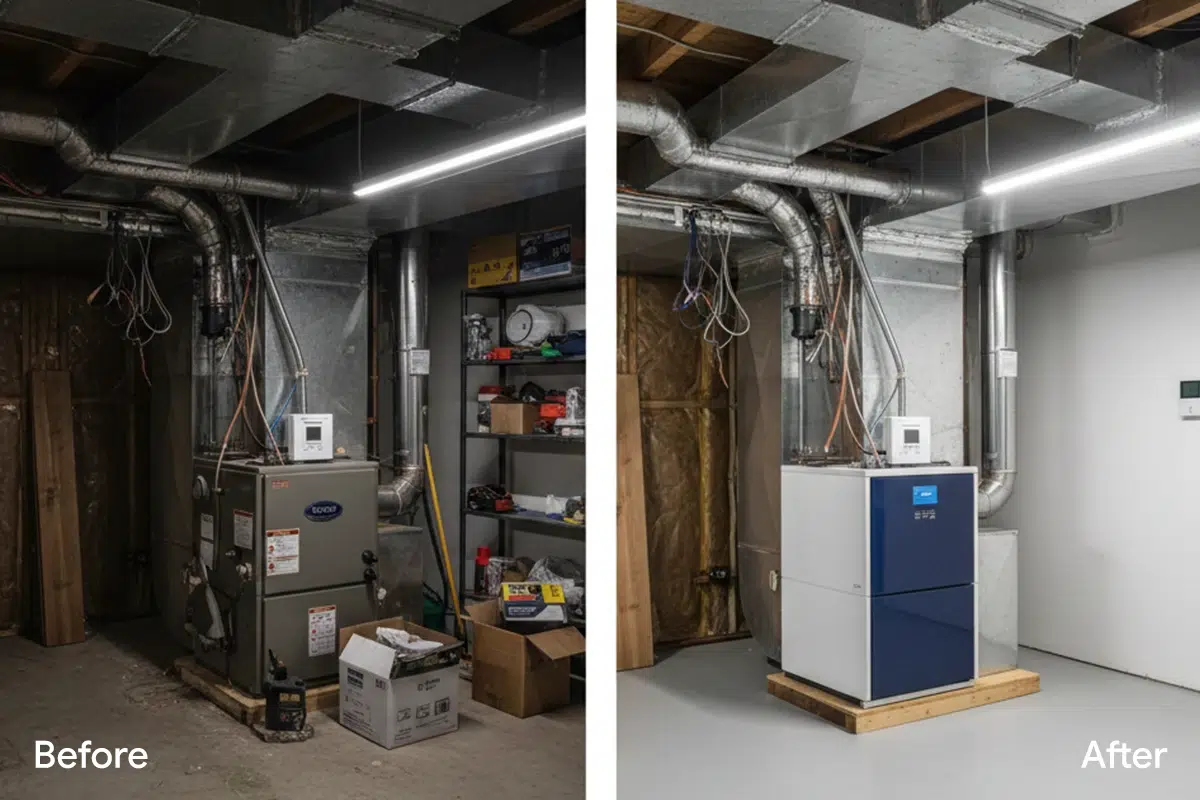
- Before-and-after photography with detailed captions. Don’t just show the finished furnace—show the old, corroded system you replaced and explain why replacement was necessary. This visual proof combined with explanation demonstrates experience comprehensively.
- Video walkthroughs of work in progress. Even simple phone videos showing your process, explaining what you’re doing and why, provide undeniable proof of hands-on experience.
- Case study narratives with obstacle discussion. “This Shadyside row house installation was complicated by 100-year-old ductwork in walls we couldn’t modify. Here’s how we solved it…” Real experience includes challenges overcome, not just successful completions.
Time-in-Business Signals AI Platforms Recognize
Longevity isn’t everything, but it’s a powerful experience indicator that AI platforms weigh heavily.
Demonstrating business establishment:
- Founded date prominently displayed and consistent everywhere online. If you’ve been in business since 1995, make that fact visible on your website, in your schema markup, on your Google Business Profile, and in your business descriptions across platforms.
- Team member tenure highlighted. “Our senior technician Mike has been with us for 18 years” demonstrates stability and accumulated experience beyond just company age.
- Historical service area evolution. “We started serving Oakland in 2005 and expanded to the entire East End by 2010” shows organic growth through reputation, not just a new business casting a wide net.
- Milestone celebrations. Twenty-fifth anniversary, 10,000th customer served, reaching 500 five-star reviews—these milestones documented on your site and social media create timestamp evidence of sustained operation.
Experience signals in content:
- Decade-specific references. “In the fifteen years we’ve been replacing furnaces in Pittsburgh, we’ve seen HVAC efficiency standards change dramatically” provides temporal context only genuine experience creates.
- Trend observations over time. “Ten years ago, most of our calls were for boiler repair. Now 70% of requests are for forced-air systems as homeowners renovate” shows you’ve witnessed industry evolution firsthand.
- Seasonal pattern knowledge. “Every January we see a spike in frozen pipe emergencies, especially in older homes with uninsulated rim joists” demonstrates repeated seasonal experience.
Expertise: Demonstrating Mastery of Your Trade
Experience proves you’ve done the work. Expertise proves you’ve mastered it and can teach others.
Educational Content That Establishes Expert Authority
Generic “how to maintain your HVAC system” articles don’t demonstrate expertise. Deep dives explaining complex concepts in accessible ways do.
Content topics that showcase expertise:
- Technical explanations made accessible. Write articles breaking down how modern variable-speed HVAC systems differ from single-stage systems, explaining efficiency implications, comfort differences, and when each makes sense. This depth separates experts from generalists.
- Diagnostic frameworks teaching customers. Create content explaining how to systematically diagnose common problems: “If your furnace won’t start, check these five things in this specific order before calling for service.” Experts share systematic approaches, not just generic advice.
- Industry standard discussions. Explain why HVAC systems should be sized properly using Manual J load calculations, what happens when systems are oversized, and why “bigger is better” is wrong. Educating about industry standards demonstrates professional expertise.
- Comparative analysis showing judgment. Write about repair versus replacement decision frameworks, explaining the factors you weigh when advising customers. This demonstrates not just technical knowledge but professional judgment.
Content characteristics of true expertise:
- Nuanced perspectives acknowledging complexity. Experts don’t offer simplistic answers—they explain variables, exceptions, and contextual factors affecting recommendations.
- Myth-busting with explanations. Identify common misconceptions in your industry and thoroughly explain why they’re wrong and what’s actually true. This positions you as an authoritative corrective voice.
- Anticipating follow-up questions. Expert content addresses not just the primary question but the natural follow-ups. This comprehensiveness signals deep topic mastery.
Credentials and Qualifications That AI Verifies
Claiming expertise is meaningless without verification. AI platforms increasingly cross-reference credential claims against authoritative sources.
Verifiable credentials to display prominently:
- State licensing numbers with links to verification databases
- Industry certifications from recognized organizations (NATE, EPA, manufacturer certifications)
- Professional association memberships (ACCA, PHCC, NECA for trades)
- Better Business Bureau accreditation with rating
- Insurance coverage documentation (general liability, workers comp)
- Bonding information for trades requiring it
- Continuing education completion demonstrating ongoing learning
Credential presentation strategies:
- Create dedicated credentials page with details. Don’t just list licenses—explain what each credential means, what qualifications were required, and why it matters to customers.
- Link to external verification. When you mention NATE certification, link to the NATE website explaining the certification. When you list your contractor license, link to the state verification database. These external connections help AI validate your claims.
- Display credentials in multiple locations. Website footer, about page, service pages, and schema markup should all include credential information for maximum visibility.
Expertise signals in team presentation:
- Individual technician credentials. Highlight certifications of team members, not just company credentials. “Mike is EPA-certified for refrigerant handling and holds NATE certifications in installation and service” demonstrates expertise depth.
- Specialization indicators. Some team members specializing in commercial work, others in residential service, some in new construction—this specialization suggests sophisticated expertise, not just generalist capabilities.
- Training investment. Mentioning that technicians attend quarterly manufacturer training or that you invest in ongoing education demonstrates commitment to expertise maintenance.
Authoritativeness: Building Recognition Beyond Your Website
Expertise is what you know. Authority is others recognizing and validating what you know. AI platforms weigh external validation heavily because it’s harder to fake than on-site content.
Media Mentions and Press Coverage
Local news features, industry publication mentions, and media citations all build authority that AI platforms discover and value.
Pursuing media visibility:
- Respond to journalist requests. Services like HARO connect journalists with expert sources. When Pittsburgh reporters need HVAC experts commenting on home winterization, be that expert source.
- Pitch seasonal stories proactively. Contact local news before heat waves or cold snaps offering to explain how homeowners should prepare, common problems you anticipate, and emergency prevention tips.
- Contribute expert commentary. When industry publications discuss trends, new regulations, or technology changes, offer your perspective as a Pittsburgh-area contractor with specific local context.
Maximizing authority from media mentions:
- Create press page showcasing media features. When you’re quoted in the Post-Gazette or featured on local TV, document it prominently on your website with links to original sources.
- Share media mentions across platforms. Social media posts, Google Business Profile updates, and email newsletters should all reference media coverage, creating multiple touchpoints AI can discover.
- Include journalist contact information where appropriate. Media sections that say “For media inquiries contact…” signal that you’re an established expert source, not just trying to promote one mention.
Industry Leadership and Community Involvement
Authority comes from leadership roles and community recognition, not just technical competence.
Authority-building activities:
- Serving on industry association boards or committees
- Speaking at trade conferences or local business events
- Teaching or mentoring apprentices and junior technicians
- Writing for industry publications or trade magazines
- Hosting workshops for homeowners on maintenance topics
- Partnering with community organizations on service projects
- Sponsoring local sports teams, schools, or charitable causes
- Participating in chamber of commerce or economic development initiatives
Documenting community authority:
- Create detailed About page telling your business story. Include community involvement, industry participation, local connections, and leadership roles. This narrative helps AI understand your authority context.
- Showcase partnerships and sponsorships. If you sponsor local Little League teams, participate in Habitat for Humanity builds, or partner with senior centers for discount services, document these prominently.
- Display association badges and memberships. Every legitimate professional association membership should be visually represented on your site with links to the organization.
Strategic Link Building for Authority
Not all links are equal. Links from authoritative local sources build E-E-A-T far more effectively than bulk directory submissions.
High-value local authority links:
- Local chamber of commerce member directory listings
- Better Business Bureau accredited business profile
- Professional association member directories
- Local news article citations and features
- Community organization partnerships
- Educational institution connections (vocational schools, apprenticeship programs)
- Municipal or county government contractor registries
- Industry supplier partner pages
Authority-building link strategies:
- Create genuinely useful resources others want to link to. Comprehensive local guides, detailed how-to content, or seasonal preparation checklists become natural link targets.
- Participate in local online communities authentically. Answering questions in neighborhood forums, contributing to local subreddits, and engaging in community Facebook groups builds visibility and natural linking.
- Build relationships with complementary businesses. Plumbers, electricians, HVAC contractors, and other home service businesses can reference each other appropriately when projects overlap, creating natural relevant links.
Trustworthiness: The Make-or-Break E-E-A-T Component
You can have experience, expertise, and authority, but without trust, AI platforms won’t recommend you. Trust is built through transparency, consistency, and reputation management.
Review Management as Trust Foundation
Reviews aren’t just social proof—they’re primary trust signals AI platforms weight heavily when deciding recommendations.
Review characteristics that build trust:
- High volume signals establishment. Fifty reviews might seem like a lot, but businesses with hundreds of reviews demonstrate sustained customer satisfaction over time.
- Consistent ratings across platforms. 4.8 stars on Google, 4.7 on Yelp, 4.9 on Facebook—consistency across platforms indicates genuine quality. Wild variations suggest review manipulation or inconsistent service.
- Recent review activity. Reviews from last month matter more than reviews from five years ago. Consistent recent reviews prove ongoing quality.
- Detailed reviews with service specifics. “They replaced our water heater in three hours, explained everything clearly, and cleaned up thoroughly” provides substance AI can reference. Generic “great service” reviews contribute less.
Review response strategies that demonstrate trustworthiness:
- Respond to every review professionally. Thanking customers for positive reviews and addressing concerns in negative reviews shows active engagement and customer care.
- Address negative reviews constructively. Apologizing for shortcomings, explaining what happened, and describing corrective actions demonstrates accountability and commitment to improvement.
- Avoid defensive or combative responses. Even when reviews seem unfair, professional responses maintain trust. Arguing with customers publicly destroys trustworthiness immediately.
 Transparency as Trust Multiplier
Businesses hiding basic information signal untrustworthiness. Radical transparency builds confidence.
Transparency elements that build trust:
- Complete contact information displayed prominently. Full address, primary phone number, email address, and contact forms all visible on every page signal openness.
- Clear service area definitions. Explicitly stating where you serve and don’t serve prevents confusion and demonstrates honesty about capabilities.
- Honest pricing guidance. Even if you can’t provide exact quotes online, explaining pricing factors and typical ranges shows you’re not hiding cost information.
- Process transparency. Explaining what happens during service calls, how long typical jobs take, and what customers should expect removes uncertainty.
- Credential verification. Linking to license verification databases and displaying insurance certificates allows customers to verify your claims independently.
Trust-destroying practices to avoid:
- Hiding or obscuring contact information
- Using misleading service area claims
- Displaying fake reviews or testimonials
- Making unverifiable claims about credentials
- Showing inconsistent business information across platforms
- Failing to respond to customer inquiries or reviews
- Using high-pressure sales tactics or scare tactics
- Avoiding transparency about pricing or process
Website Security and Professionalism
Technical trust signals matter more than many contractors realize. AI platforms evaluate website security and professionalism as trust indicators.
Essential trust signals:
- HTTPS encryption for all pages. Secure connections are baseline requirements—sites without proper SSL certificates signal untrustworthiness immediately.
- Professional design and functionality. Broken layouts, outdated designs, numerous errors, or dysfunctional features all undermine trust. Your website doesn’t need to be fancy, but it must work properly.
- Privacy policy and terms of service. These legal pages signal legitimate business operation and respect for customer information.
- Clear business identity. Company name, owner names, years in business, physical location—transparent identity information builds trust while vagueness destroys it.
- No spam or manipulative tactics. Pop-ups, aggressive retargeting, spam tactics, or manipulative urgency messaging all damage trustworthiness perception.
Consistency Across Digital Presence
Inconsistencies between your website, Google Business Profile, Yelp, Facebook, and other platforms signal unreliability. AI platforms detect these discrepancies and reduce confidence in your information.
Critical consistency requirements:
- Identical business name spelling and formatting everywhere
- Matching address information across all platforms
- Same primary phone number listed consistently
- Synchronized business hours across all listings
- Consistent service descriptions and categories
- Matching logo and branding across platforms
- Aligned messaging and value propositions
Consistency maintenance strategies:
- Audit your online presence quarterly. Check every major platform for consistency and correct any discrepancies immediately.
- Update everywhere simultaneously. When hours change or you add services, update all platforms at once to maintain consistency.
- Create a brand guidelines document. Document your exact business name, address format, phone number, and standard descriptions to ensure consistency in future updates.
E-E-A-T isn’t a checklist you complete—it’s an ongoing commitment to demonstrating genuine expertise, building legitimate authority, and earning trust through transparency and consistency. The businesses dominating AI-powered search recommendations aren’t gaming systems or exploiting loopholes. They’re simply making it undeniably clear they’re the real deal, giving AI platforms the confidence to recommend them without hesitation.