

Running a small business means wearing multiple hats: marketing manager, customer service rep, accountant, and operations director all rolled into one. The challenge isn’t just doing more with less; it’s competing against larger companies with bigger budgets and dedicated teams. That’s where artificial intelligence comes in.
AI tools have evolved from expensive enterprise software to accessible, affordable solutions designed specifically for small business needs. Whether you’re a solo HVAC contractor managing appointments or a growing roofing company trying to streamline operations, the right AI tools can save you hours every week, improve customer experience, and help you compete with businesses twice your size.
AI offers many benefits for small businesses, including the ability to level the playing field with larger competitors and significantly boost efficiency.
In this guide, we’ll explore the best AI tools for small businesses in 2025, organized by business function. These aren’t futuristic concepts. They’re practical tools you can implement today to see immediate results.
Introduction to Artificial Intelligence
Artificial intelligence, or AI, is transforming the way small businesses operate by enabling computers to perform tasks that once required human intelligence—like learning, problem-solving, and making decisions. Today’s AI tools are designed to help small businesses automate repetitive tasks, streamline operations, and deliver a better customer experience. By leveraging AI tools, small business owners can boost productivity, reduce manual workload, and make smarter, data-driven decisions. Whether it’s handling customer inquiries, managing schedules, or analyzing business data, AI tools empower small businesses to compete more effectively and focus on what matters most: growing their business.
Benefits of Using AI Tools for Small Business
AI tools offer a wide range of benefits for small businesses looking to work smarter, not harder. By automating routine tasks such as data entry, appointment scheduling, and bookkeeping, AI tools free up valuable time for business owners and their teams to focus on strategic growth. AI-powered marketing automation tools can help create and launch targeted campaigns, increasing customer engagement and driving more sales. When it comes to customer service, AI tools for small businesses can provide instant, personalized support around the clock, improving response times and customer satisfaction. Additionally, these tools can analyze customer data to reveal trends and preferences, helping businesses make informed decisions and stay ahead of the competition. With the right AI tools, small businesses can create more effective marketing, improve customer service, and operate more efficiently than ever before.
AI Marketing Tools That Drive Real Results
1. ChatGPT for Content Creation and Customer Communication
ChatGPT has become indispensable for small businesses that need to create content quickly without hiring a full-time writer. As an AI assistant, ChatGPT streamlines business operations by automating tasks like content creation and customer communication. From drafting social media posts to answering customer emails and questions, ChatGPT handles routine writing tasks that used to consume hours of your day.
For service businesses, ChatGPT excels at creating service descriptions, blog post outlines, email newsletters, responses to customer reviews, and answering questions from customers. The AI generates content rapidly, but it’s important to review the output for accuracy and appropriateness. ChatGPT also creates long form articles for marketing purposes, rewrites content to improve clarity or tone, and produces a variety of content types from simple prompts. The key is learning to prompt it effectively. Give it context about your business, your tone, and your audience, and it produces surprisingly good first drafts that you can quickly refine.
The free version provides substantial value, while ChatGPT Plus ($20/month) offers access to more advanced models and faster response times. For most small businesses, the free tier is enough to get started.
Best for: Content creation, email drafting, brainstorming, customer service responses
2. Jasper AI for Marketing Copy
While ChatGPT is versatile, Jasper AI is a generative AI tool designed specifically for marketing copy. As an AI tool, Jasper provides templates tailored for business needs, making it easy to write ad copy, landing page content, product descriptions, or email campaigns. Jasper’s marketing-focused templates speed up the process significantly.
Jasper can also help create long form articles for content marketing, making it a strong choice for businesses looking to produce detailed, high-quality written pieces efficiently. It includes features like brand voice customization, which ensures all your content maintains consistent tone and messaging. For service businesses running paid ads or building service pages, this consistency is valuable for building brand recognition.
Pricing starts at $49/month, which is an investment, but for businesses actively creating marketing content, the time savings quickly justify the cost.
Best for: Ad copy, landing pages, email marketing, social media content
3. Canva AI for Visual Design
Canva is an AI tool that has integrated AI features to make professional design accessible to non-designers. The Magic Design tool generates complete design layouts from your text prompts, while Background Remover and Magic Eraser help you edit photos without Photoshop skills.
For service businesses, Canva AI creates social media graphics, before-and-after project showcases, promotional materials, branded documents, and even slide decks and presentations using its AI features. The platform creates graphics and visual content efficiently, and the AI-powered templates adapt to your brand colors and fonts, maintaining visual consistency across all your marketing materials.
Canva offers a free tier with basic AI features, while Canva Pro ($12.99/month) unlocks the full AI toolkit including unlimited background removal and access to premium templates.
Best for: Social media graphics, marketing materials, presentations, slide decks, branded content
AI Tools for Customer Service and Communication
4. Tidio for AI Chatbots
Tidio is an AI tool that provides an AI chatbot to handle customer inquiries on your website 24/7. For service businesses, this means capturing leads even when you’re on a job site or after business hours. The chatbot can answer questions about your services, pricing, availability, and service areas.
What makes Tidio valuable is its ability to qualify leads before they reach you. The chatbot can ask preliminary questions about the customer’s needs, budget, and timeline, then either provide immediate answers or schedule a callback when you’re available. This helps automate the process to answer questions and deliver information efficiently.
Tidio offers a free plan for basic chatbot functionality, with paid plans starting at $29/month for more advanced AI features and increased conversation limits.
Best for: Website chat, lead capture, customer qualification, after-hours support
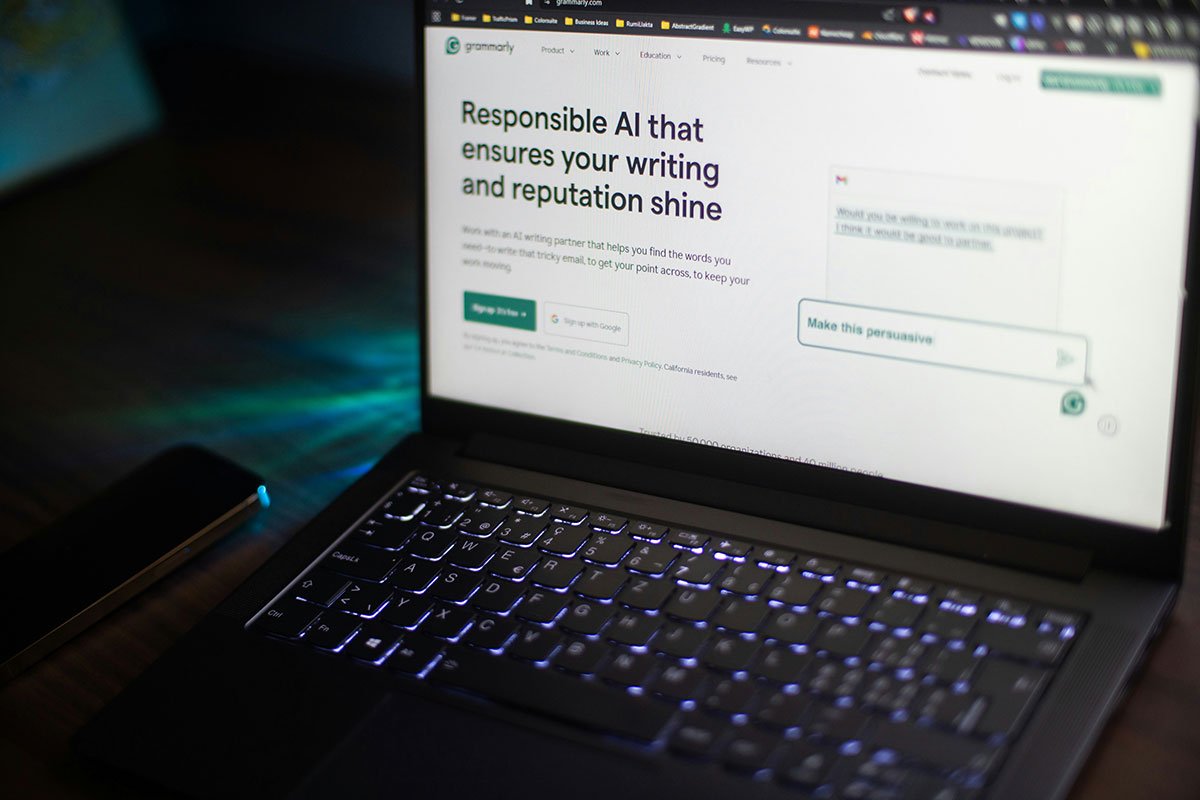
5. Grammarly for Professional Communication
While not exclusively AI-powered, Grammarly uses artificial intelligence to improve your written communication. For small business owners who send dozens of emails daily, Grammarly catches embarrassing typos, suggests clearer phrasing, and ensures your messages sound professional.
The tone detection feature is particularly useful. It tells you whether your email sounds friendly, formal, concerned, or urgent, helping you adjust your communication to match the situation. This is invaluable when responding to customer complaints or negotiating with suppliers.
Grammarly offers a free version that covers basics, while Grammarly Premium ($12/month) provides advanced suggestions for clarity, engagement, and delivery.
Best for: Email communication, proposal writing, customer correspondence

AI Scheduling and Administrative Tools
6. Calendly with AI Scheduling
Calendly is an AI tool that has introduced AI-powered scheduling features that go beyond basic appointment booking. The AI suggests optimal meeting times based on your existing schedule, handles timezone conversions automatically, and even drafts reminder messages.
For service businesses that schedule consultations, estimates, or service appointments, Calendly eliminates the back-and-forth of finding mutually available times. Customers see your real-time availability and book directly, reducing no-shows and streamlining your schedule. Calendly can also automate follow up tasks after appointments or meetings, such as sending reminders, thank-you notes, or next steps, ensuring continuous client engagement.
Calendly offers a free basic plan, with paid plans starting at $10/month for additional features like payment collection and team scheduling.
Best for: Appointment scheduling, consultation booking, estimate requests
7. Otter.ai for Meeting Transcription
Otter.ai automatically transcribes and summarizes your phone calls, video meetings, and in-person conversations. For service businesses, this is incredibly useful for documenting customer requirements, capturing project details during site visits, or keeping records of team meetings.
The AI summarizes key points, identifies action items, and makes your conversations searchable. Instead of scrambling to take notes during a customer call, you can focus on the conversation knowing that Otter is capturing everything.
Otter provides a generous free tier with 300 monthly transcription minutes, while paid plans start at $10/month for extended usage.
Best for: Meeting notes, customer call documentation, project requirement capture
8. Zapier with AI Actions
Zapier is an AI tool that connects your business apps and automates repetitive tasks between them. The recent addition of AI-powered actions means you can now incorporate intelligent processing into your workflows. For example, automatically categorize incoming emails, extract key information from form submissions, or generate follow-up messages based on customer interactions.
Zapier enables custom solutions by allowing users to build tailored automations for their unique business needs. A practical workflow for service businesses might be: when a new lead submits a contact form,
Zapier’s AI extracts the service type and location, checks your calendar for availability, and sends a personalized response with available appointment times.
Zapier offers a free tier for basic automations, with paid plans starting at $19.99/month for more complex workflows and AI actions.
Best for: Workflow automation, app integration, repetitive task elimination
AI Financial and Business Intelligence Tools
9. QuickBooks with AI Features
QuickBooks is an AI tool with integrated AI capabilities that help small businesses manage finances more intelligently. The AI categorizes transactions automatically, predicts cash flow, identifies tax deductions you might miss, and flags unusual expenses that need attention.
For service businesses managing multiple projects, this AI tool helps spot trends in your business finances, such as changes in cash flow or expense categories. QuickBooks AI also helps track job costs, identifies your most profitable services, and provides insights about spending patterns. This intelligence helps you make better business decisions without needing an accounting degree.
Pricing starts at $30/month for basic plans, with more comprehensive features available in higher tiers.
Best for: Bookkeeping, expense tracking, financial forecasting, tax preparation
10. Nanonets for Invoice Processing
Nanonets uses AI to extract data from invoices, receipts, and other documents automatically. Instead of manually entering invoice details into your accounting system, Nanonets reads the document, extracts relevant information, and populates your records.
This is particularly valuable for service businesses that receive numerous supplier invoices, subcontractor bills, and receipts. The AI learns your specific document formats over time, becoming more accurate with use.
Pricing is based on usage, starting around $499/month for regular business use, which makes it most suitable for businesses processing significant document volumes.
Best for: Invoice processing, receipt management, document data extraction
AI Tools for Sales and Lead Management
11. HubSpot with AI Features
HubSpot’s free CRM is an AI tool that now includes AI-powered features to help small businesses manage leads and customer relationships more effectively. The AI scores leads based on likelihood to convert, suggests optimal times to follow up, and even drafts personalized email sequences.
For service businesses, HubSpot provides a single platform for managing all aspects of customer relationships and sales. Its AI helps prioritize which leads to contact first, reminds you when to follow up with quotes, and tracks all customer interactions in one place. The content assistant feature also helps you write better emails and create more engaging content.
HubSpot offers a robust free tier with basic AI features, while paid plans start at $50/month for advanced automation and reporting.
Best for: Lead management, email campaigns, customer relationship tracking
12. Crystal for Personality Insights
Crystal analyzes publicly available information to predict personality types and communication preferences of your contacts. Before a sales call or important meeting, Crystal provides insights about how to communicate most effectively with that specific person.
For service business owners who struggle with sales conversations, Crystal takes the guesswork out of communication style. It suggests whether to be direct or build rapport first, whether to focus on details or big picture, and how to frame your proposals for maximum impact.
Pricing starts at $49/month, which is worthwhile if you’re actively pursuing larger projects or commercial accounts.
Best for: Sales calls, proposal customization, client communication
AI Tools for Operations and Project Management

13. Notion AI for Documentation and Knowledge Management
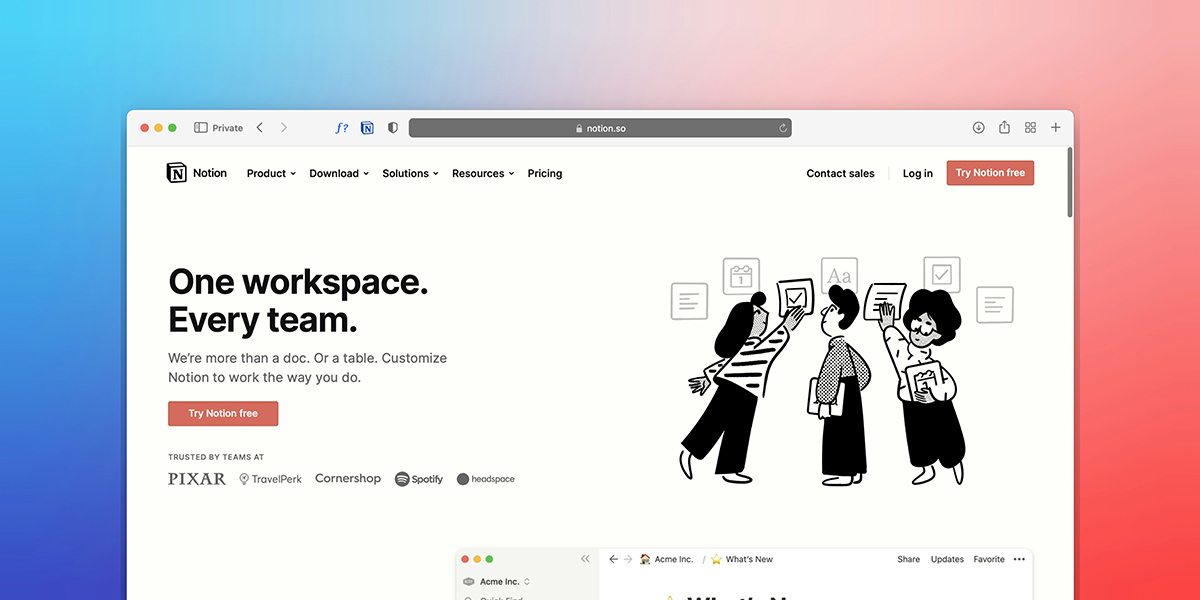
Notion AI is an ai tool that helps you create, organize, and find information within your business documentation. For service businesses, this means maintaining organized process documentation, creating training materials for new team members, or building a knowledge base of common customer questions.
Notion serves as a single platform for documentation, knowledge management, and collaboration. The AI can summarize long documents, generate action items from meeting notes, or help you write standard operating procedures. As your business grows, having well-organized documentation becomes critical, and Notion AI makes creating and maintaining that documentation far less tedious.
Notion offers a free personal plan, while business plans with full AI features start at $10/month per user.
Best for: Process documentation, knowledge base creation, team collaboration
14. Fireflies.ai for Call Analytics
Fireflies.ai goes beyond simple transcription by analyzing your calls for insights. It tracks talk-to-listen ratios, identifies frequently discussed topics, and highlights key moments in conversations. For service businesses that conduct estimate calls or project consultations, this provides valuable data about what customers care about most.
The analytics help you understand which services generate the most questions, what objections come up repeatedly, and how your team communicates with customers. These insights help you refine your sales process and improve customer service.
Fireflies offers a free tier with basic features, while paid plans start at $10/month for advanced analytics.
Best for: Call analysis, sales coaching, customer insight gathering
15. Copy.ai for Quick Content Generation
Copy.ai specializes in generating short-form content quickly. Need five versions of an ad headline? Ten social media captions for your latest project? Email subject lines for your newsletter? With Copy.ai, AI generates multiple options in seconds, giving you choices to pick from rather than staring at a blank page.
For busy service business owners who need to maintain social media presence but lack time for content creation, Copy.ai helps you stay active online without the time commitment of creating everything from scratch.
Copy.ai offers a free tier with limited usage, while paid plans start at $49/month for unlimited content generation.
Best for: Social media captions, ad headlines, email subject lines, content variations
Implementation and Best Practices
Successfully implementing AI tools for small businesses starts with identifying the areas where AI can have the biggest impact—such as project management, marketing, or customer service. Small business owners should research and select the best AI tools that fit their unique needs, considering factors like cost, scalability, and how easily the tool integrates with existing workflows. It’s important to choose AI tools that are user-friendly, so non-technical users can get up and running quickly without needing advanced technical expertise. The best AI tools for small businesses are those that generate high-quality content, provide actionable insights, and help teams stay focused on business goals. To maximize benefits, ensure that new AI tools work seamlessly with your current systems, and start with a pilot project before rolling out more broadly. By taking a thoughtful, step-by-step approach, small businesses can unlock the full potential of AI technology.
Common Mistakes to Avoid
When implementing AI tools, small businesses should be mindful of a few common pitfalls. Relying too heavily on a single tool can limit flexibility and leave your business vulnerable if that tool fails or becomes obsolete. It’s also important to remember that AI should support—not replace—human judgment and decision-making. Protecting sensitive data is crucial; always choose AI tools that prioritize data security and customer trust. Avoid using AI tools to generate low-quality content or to bombard website visitors with irrelevant messages, as this can damage your brand and drive customers away. By steering clear of these mistakes, small businesses can ensure their AI tools help them achieve their business goals while maintaining strong relationships with customers.
Real-World Examples and Success Stories
Many small businesses are already seeing impressive results by leveraging AI tools. For instance, a small e-commerce shop implemented AI-powered chatbots to provide 24/7 customer support, leading to higher sales and improved customer satisfaction. A boutique marketing agency used AI-powered marketing automation to create and manage campaigns across multiple platforms, resulting in a significant boost in lead generation and conversion rates. Tools like Google Workspace, HubSpot, and Salesforce have helped small businesses streamline operations, improve customer service, and make smarter, data-driven decisions. These real-world success stories show that by embracing AI-powered solutions, small businesses can enhance customer experience, operate more efficiently, and stay ahead in today’s competitive market.
Choosing the Right AI Tools for Your Business
With so many AI tools available, the key is starting strategically rather than overwhelming yourself trying to implement everything at once. Begin with the areas of your business that consume the most time or create the most friction.
If you spend hours writing content, start with ChatGPT or Jasper. If scheduling is chaotic, implement Calendly. If you’re drowning in administrative tasks, explore Zapier automations. Focus on one tool at a time, implement it fully, and then expand from there. This approach helps avoid confusion and maximizes effectiveness.
Consider your budget realistically. Many AI tools offer free tiers that provide substantial value. Start with free versions, prove the value, and then upgrade to paid plans when the ROI becomes clear. A tool that saves you five hours per week easily justifies a $50 monthly subscription.
Look for tools that integrate with systems you already use. If you use Gmail, choose AI tools with strong Gmail integration. If QuickBooks is your accounting system, prioritize tools that connect seamlessly with it. Integration eliminates data entry and ensures your tools work together rather than creating new silos.
The Real Value of AI for Small Businesses
The true benefit of AI tools isn’t just saving time, though that’s significant. For the small business leader, these tools empower you to manage operations more effectively, overcoming resource limitations and competing with larger companies. It’s about enabling you to provide a level of service and professionalism that was previously only possible with a large team.
You can respond to customer inquiries instantly even when you’re on a job site. You can maintain consistent marketing presence without hiring a marketing team. You can manage finances with insights previously requiring an analyst. You can compete with larger competitors by operating more efficiently. Looking ahead, agentic AI systems could further enhance efficiency by autonomously handling tasks like scheduling, updating, or modifying orders, freeing up your time for higher-level business decisions.
At Redshift Local, we help service businesses leverage technology, including AI tools, as part of comprehensive marketing strategies. We understand that AI tools are means to an end: growing your business, attracting better customers, and operating more profitably. Our VTC Framework (Visibility, Traffic, Conversions) incorporates the right technology at the right time to support your growth goals.

Getting Started with AI Tools Today
The barrier to entry for AI tools has never been lower. Most tools we’ve discussed offer free trials or free tiers that let you experiment without financial risk. Start small, focus on solving one specific pain point, and expand from there.
Don’t expect AI to replace human judgment or expertise. These tools augment your capabilities, handling routine tasks so you can focus on the work that truly requires your expertise. The goal isn’t to eliminate human touch from your business but to eliminate the tedious tasks that prevent you from delivering that human touch where it matters most.
The competitive advantage goes to businesses that adopt AI thoughtfully and strategically. While your competitors debate whether AI is worth exploring, you can be using it to serve customers better, operate more efficiently, and grow faster.
Ready to build a comprehensive digital marketing strategy that incorporates the right tools and tactics for your specific business? Contact Redshift Local today. We’ll help you cut through the noise, identify what actually works for service businesses, and implement strategies that drive real results. For ongoing tips and the latest insights, be sure to visit our Digital Marketing blog.